Safety tools 101: Why safe players are brave players

Overview

You have found a D&D group https://groupfinder.eu/list, your characters are ready and the players are hyped for the start of the game. However there is a thought that keeps cropping up in the back of your head: “What if they take the story in a direction I don’t feel comfortable with?” Tabletop roleplaying games are built on imagination and improvisation. Therefore setting boundaries might feel wrong or tricky. Perhaps you or someone else has a phobia of spiders, or some situations might make you uncomfortable. This is where safety tools come to play. Before you start thinking that these are borderline “censorship” methods - they are communication shortcuts that ensure everyone in your group is having fun, even if the story gets dark or brutal.

What are safety tools?

Think of safety tools as subtle “safe words” in a stunt show or a timeout in sports. It doesn’t mean that the show can’t go on, instead it allows for the participants to pause, edit or skip certain bits of content that might not be something everyone is comfortable with. It avoids the need for that awkward, long speech about themes and decisions while making some people feel uncomfortable with either expressing their creativity or feeling targeted in another way. When everyone at your group knows where the “emergency brake” lever is, players usually feel more comfortable with intense roleplay situations, as everyone feels more in control of the direction the story is going.
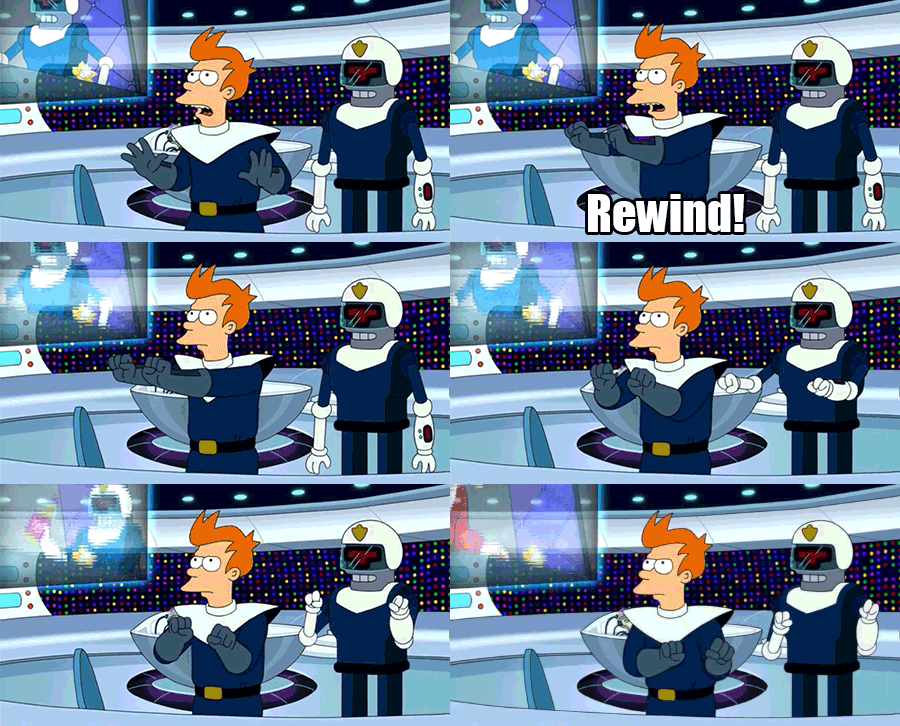
If the game goes in a direction that everyone is comfortable with - rewind.

The big three

Lines and Veils This is a list that is collaboratively created during Session Zero https://groupfinder.eu/library/session-0-checklist-how-to-build-a-dnd-group-that-lasts. Everyone agrees upon setting limitations regarding various topics and when to let the story progress in a “skip cutscene” manner. Lines: Hard boundaries. If a “line” is drawn at harming animals, these situations do not occur in your games. Veils: A soft boundary - this is more of a “fade to black” moment, where the story overlooks specific details and situations, but still acknowledges their existence. The X-card If a situation makes you uncomfortable, signaling (either with a physical card with an X on it, or writing it in the chat) the X-card https://docs.google.com/document/d/1SB0jsx34bWHZWbnNIVVuMjhDkrdFGo1_hSC2BWPlI3A/edit?tab=t.0 means that whatever is going on is skipped or retconned. The game continues but avoids the specific direction it is currently headed. This is a no questions asked situation. You don’t have to explain why this situation bothers you, a healthy group will respect your choice and preference and move on. Open door policy In a situation, where you do not feel comfortable, you are permitted to simply get up and leave the table to either “take five” or stay away until the current situation is resolved. Or if the theme is simply overwhelming, you can excuse yourself for the rest of the session. It is important that the group agrees beforehand to respect the open door approach and will not judge the person choosing to opt out.

“This will ruin the mood!”

As a DM (or a player), you might fear that using safety tools will break the immersion. In reality, the opposite is true - players knowing that they and their preferences are respected will keep everyone on the same page. When a group has no discussed boundaries beforehand, players are likely to simply “shut down” during specific situations and simply disconnect either mentally or digitally from the game at hand. Since the story involves everyone in the group, everyone should feel like they want to be part of it. Knowing beforehand which themes and topics may be an issue for your players will help everyone in the group focus more on the game, and less on worrying or playing the “guessing game”, wondering whether the topic at hand is appropriate for everyone.

How to react when a tool is used

If you are the DM and someone uses the X-card or reminds of a “line”, here is a professional way to handle it: Stop. Pause the narration or situation immediately. Acknowledge. Say “Thanks for letting me know.” Don’t ask “Why” or try to downplay the situation. Respect the player and their decision Adjust. Change the scene. Feel free to “rewind” the scene and take it in a different direction. Instead of spiders in the room, there are goblins, wolves, mimics, dragons (okay lets not overdo it…), or nothing at all. Check-in. A quick “Everyone good?” to check whether the situation has been resolved. And continue the game.

Why do we promote using safety tools?

When meeting new people for the first time, you don’t have years of history to know what their triggers or boundaries are. And circling back to the “guessing game” - you shouldn’t be expected to know these. Instead clear communication will help your group in the long run. Using safety tools should be seen as a strong green flag. It tells others that you are a thoughtful player or a DM, who cares about the people behind the characters. You will turn the group of strangers into trusted players much faster.

Be a brave player

Great tabletop gaming stories are ones where players take risks, are vulnerable, come up with stupid plans (that somehow work) and defeat villains. Safety tools will guide your game in a direction where you don’t step on anyone’s toes and lets you focus on the game at hand. Ready to get into a game? Post your player profile https://groupfinder.eu/players on Groupfinder, or find a group https://groupfinder.eu/list where you can gather other like-minded, respectful, players.  If you know of a DM, who is looking to level up their group management - then share this article with them and help make the tabletop community a better and more enjoyable place for everyone.

Other entries

BlackwaterDnD
Actual Play & Podcasts

BlackwaterDnD

English
Dungeons & Dragons
Actual Play
BlackwaterDnD is a group of best friends rolling dice together and playing pretend, based in Vancouver, Canada playing Dungeons & Dragons. We produce actual play TTRPG content, including our Main Campaign streamed on Twitch, mini-series, and supplementary shows all based around the joy of imagination and improvisation. We are a group of performers and storytellers who focus on stories with heart, that will have you laughing one minute and reaching for your tissues the next. We strive to foster a community that is inclusive, diverse and accessible, and brings a little something for everyone to the table - whether you're brand new to the game, or have every source book you can think of. Links youtube.com - Youtube channel twitch.tv - Twitch channel feeds.transistor.fm - Podcast feed patreon.com - Patreon page discord.gg - Discord server

Read more

How to find a D&D group online: The ultimate guide for 2026
Guides & How-to

How to find a D&D group online: The ultimate guide for 2026

TTRPG
Dungeons & Dragons
Guides
Are you just getting into D&D? You most likely already know the hardest part of playing Dungeons & Dragons isn't defeating a Red Dragon or figuring out what kind of bonuses should apply when picking a lock. The actual "Big Bad Evil Guy" of any tabletop roleplaying game (TTRPG) is scheduling and finding a reliable group. Whether you are brand new to the hobby, having just either discovered Critical Role or finished the last season of Stranger Things, or you are well-versed in the tabletop gaming scene, you are most likely aware that finding a group or other players is not as easy as you might’ve thought initially. Even though Dungeons & Dragons is more popular than ever, it still can feel like you are the only one interested in trying it out. We have compiled this article to try and help you find your way to your next D&D game. Quick Steps to Find a Group: 1. Create a Groupfinder player profile. 2. Define your schedule and timezone. 3. Browse open games or wait for a DM to find you. The traditional methods: forums and LFG subreddits The internet works. It works in the sense that there are others like you looking for a game to join. But navigating through all the different mediums is going to most likely feel like a chore. Reddit (r/lfg and r/LFG_Europe) The standard answer to "where to find D&D players" has historically been Reddit. The Pros: A massive volume of players. If you post a compelling game pitch as a DM, you will get dozens of applications within hours. The Cons: Because of the sheer volume, it is incredibly easy for your post to get buried. Players often find themselves filling out dozens of Google Forms without ever hearing back. Plus, formatting restrictions make it difficult to filter for specific needs like exact timezones (a massive headache for EU/Global players), Virtual Tabletop (VTT) preferences, or safety tools. Discord LFG channels Many TTRPG YouTubers, podcasters, bloggers, game systems, and communities have their own dedicated Discord servers with LFG channels to allow players to advertise their interest. The Pros: Discord is great for instant communication. You can start a chat with potential party members quickly and in real-time to see if your personalities fit before committing to an actual game night. The Cons: Discord LFG channels are essentially endless scrolling text feeds. Searching through thousands of chat messages to find a oneshot or campaign that fits your specific schedule is exhausting. The "paid vs. free" game debate Over the last few years, there has been a massive rise in "Pro DMs" hosting games on platforms where players pay per session (often $15 to $30+). If you have the budget, paid games practically guarantee that a session will actually happen, as players are financially invested. However, for many, the soul of D&D is about gathering around a virtual table as friends playing a game for free. While we are in no way trying to negatively portray paid games, they will most likely not have that “organic” feel to it that regular games do. For many players, it might be the perfect fit. Games happen when they are scheduled, the DM is prepared for the session and will most likely have figured out all the technical aspects beforehand. The modern solution: dedicated LFG platforms If you want to stop scrolling through forums and social media posts, you need a tool actually built for the job. If you are looking to join a D&D campaign online (or even find a local game), Groupfinder is the best dedicated tool available today. Built specifically to solve the age-old problem of TTRPG matchmaking, it completely streamlines the process. Why a dedicated platform beats a forum post Timezone & schedule filtering: No more guessing timezone conversions. On Groupfinder, you can filter game and player posts by timezones. That way you will know that what you are seeing will match your preferences and your real-life schedule. Detailed player profiles: Instead of pitching yourself to new DMs, you can create your permanent player profile (How to write a great player profile that helps you find a DnD group). You can introduce yourself, mark down any specific preferences, or even describe your previous experiences if you have any. You can also list your preferred systems (D&D 5E, D&D 5.5E, or if you are open to trying out other systems, those too can be listed), and let groups search for you. Advanced game tags: You can filter groups and players by various tags. Whether it is for themes, topics, inclusivity, or experience level, such as "Beginner friendly," "Roleplay focused," or "LGBTQ+ friendly." How to make your player profile stand out Whether you are posting on a forum or filling out your profile on Groupfinder, what you write matters. DMs sift through a lot of profiles; here is how to make yours stand out: Be Honest About Your Experience: DMs do not mind beginners! For many, it might be exactly who they are looking for. New DMs are more likely to feel more comfortable playing with other newbies. Their mistakes are less obvious and you will all learn together. Define Your "Pillars of Play": Do you prefer emotional roleplay and character voices, or are you more interested in tactical, grid-based combat? Be detailed about what you like and dislike about the game. List Your dealbreakers: If you are not comfortable with certain topics, mark them down. Being open about those will give the reader a good overview of whether you would fit their group or not. The age-old saying “No D&D is better than bad D&D” holds true. Red flags to watch out for Once you find a group that seems to be a good fit on paper, you still need to ensure whether the game style and dynamic between players is for you. If the game has a “Session zero”, you can get a better understanding of who the people involved are, what they are looking for, and whether your preferences align. Watch out for these red flags: The "Main character syndrome": If a player is constantly talking over others during introductions or insists their homebrew character concept overrides the DM's worldbuilding, it is a sign of bad table etiquette to come. This might be something that, when addressed, can be resolved - but don’t let those instances go by without taking note. Poor Communication: If the group doesn’t seem to be able to respond to important messages within a reasonable time, it might indicate that the group members are not that interested or have the time required to manage an ongoing game. Prioritizing safety: The "Session 0" essentials Finding a group is only half the battle; ensuring the group is a safe and comfortable environment for everyone is what makes a campaign last. Modern TTRPG matchmaking relies heavily on **Safety Tools** to set boundaries before the first die is rolled. Commonly used safety tools If you are joining a new group, look for these terms in the game description. If they aren't there, don't be afraid to ask the DM which ones they use: Lines and Veils: "Lines" are hard limits (topics that will never be in the game). "Veils" are topics that can happen but "fade to black" without graphic detail. The X-Card: A tool that allows any player (or the DM) to edit out content in real-time if it becomes uncomfortable. Monte Cook Games RPG Consent Checklist: A physical or digital form where players check off their comfort levels with various horror or social themes. Why this matters for online play When playing with strangers online, communication can sometimes be misinterpreted. Using these tools isn't about being "sensitive"—it's about professionalism and clear communication. Groups that use safety tools have a significantly lower "ghosting" rate because expectations are set early. On Groupfinder, we encourage all DMs to list their preferred safety tools in their group descriptions. This helps players find the right "vibe" and ensures a long-lasting adventure. Frequently Asked Questions (FAQ) Can I play D&D online for free? Yes. The basic rules for Dungeons & Dragons are available for free online (view the Basic Rules here). You do not need any books to get your first few sessions going. You can use free Virtual Tabletops like Roll20 or Owlbear Rodeo, talk over Discord, and find your group for free using Groupfinder. Will I need a webcam to play D&D? Not necessarily! While some groups prefer playing with cameras on to read facial expressions during roleplay, many groups play "audio-only" using just a microphone. What if I haven’t played D&D or any other TTRPG before? Not to worry - everyone has to start somewhere, just like you. If you have found a beginner-friendly group, feel free to ask any question, no matter how simple it might seem. You can also find a multitude of resources online. But be aware that you will never know everything about the game. That is not how it goes - knowing where to find information is how you get by. Stop searching and find your group Finding an online D&D group might seem like a daunting task. But in reality, you just need to put yourself out there and start your search. It might take weeks before you get contacted by a group. Remember to keep your post “bumped”. That will move your profile in front of all the other listings, refreshing it to the top. You can bump your post every day. Your profile also doesn’t have to be perfect from the start. Whenever you think of something to add, just return and edit your post. Feel free to share your profile link in other channels, you no longer have to spam individual messages - you now have a player profile that introduces you and your preferences. Create your free player profile on Groupfinder today, browse open games, and let the perfect campaign find you.

Read more

Basic Roleplaying (2023)
Tabletop Roleplaying Games

Basic Roleplaying (2023)

TTRPG
Rules-light
Chaosium
Basic Roleplaying is the venerable "D100" engine that has powered Chaosium’s greatest hits for over four decades. Originally appearing as a slim booklet in 1980, it was most recently revitalized as the Basic Roleplaying: Universal Game Engine in 2023. In 2026, it stands as one of the industry's most important open-source platforms, released under the ORC License, allowing independent creators to build and sell their own games using its legendary, time-tested mechanics. Description BRP is a "genre-neutral" toolkit that discards character levels and rigid classes in favor of a pure skill-based system. Whether you are playing a Bronze Age warrior, a 1920s detective, or a futuristic mech pilot, the core experience remains the same: your character is defined by what they can do. Because it uses percentages (e.g., "I have a 65% chance to climb this wall"), it is widely considered the most intuitive and "transparent" RPG system for new players to understand at a glance. System Overview & Key Features The Universal D100 Engine Every action is resolved by rolling two ten-sided (d10) dice to get a result from 1 to 100. If you roll is equal to or under your skill rating, the action is deemed a success. This approach simplifies the mechanical process of the game, as there are no complex tables to keep track of and compare to decypher whether it is a success or failure. Organic Character Growth There is no "Experience Points" system in the traditional sense. Instead, when you succeed in using a skill, you mark a "Skill Check" on your character sheet. At certain stops in the game/story, the player rolls to see if the character improves in those skills, meaning your character evolves based specifically on the actions they performed (and succeeded at) during the game. Modular Rule Design The Universal Game Engine is designed with variations and systems to choose from. GMs can choose whether they prefer to just use "Hit Points" or add a more detailed wound system with "Hit Locations" for more realistic tactical consequences. Systems for Magic, Sorcery, Mutations, or Superpowers (depending on the setting) can be added, instead of being baked in the core mechanics, ensuring the mechanics always fit the theme of the game. Deadly and Tactical Combat BRP combat is grounded and dangerous. Unlike high-fantasy games where adventurers have a vast health pool, a single strike of a sword or bullet in BRP can be fatal. This encourages players to think creatively and use mechanics and terrain to their advantage. Talking their way out of situations is often seen as more reasonable (and survivable), than just treating every conflict as a forced combat situation. The ORC License Revolution By introducing to the Open RPG Creative (ORC) license, BRP started a wave of third-party "Powered by BRP". This has expanded the system into new genres like Cyberpunk, Wuxia, and Cozy Fantasy, all supported by a single, unified ruleset and system, compatible with most themes. Compatibility with "The Big Three" Because the core mechanics have remained the same since the beginning, a monster or spell from a 1980s supplement is almost always compatible with the modern 2026 engine. This gives GMs access to one of the largest libraries of pre-written adventures in tabletop gaming, spanning Call of Cthulhu, RuneQuest, and Pendragon. Additional links chaosium.com/brp : Official BRP Universal Game Engine portal basicroleplaying.org : The primary community hub and "BRP Central" forums

Read more